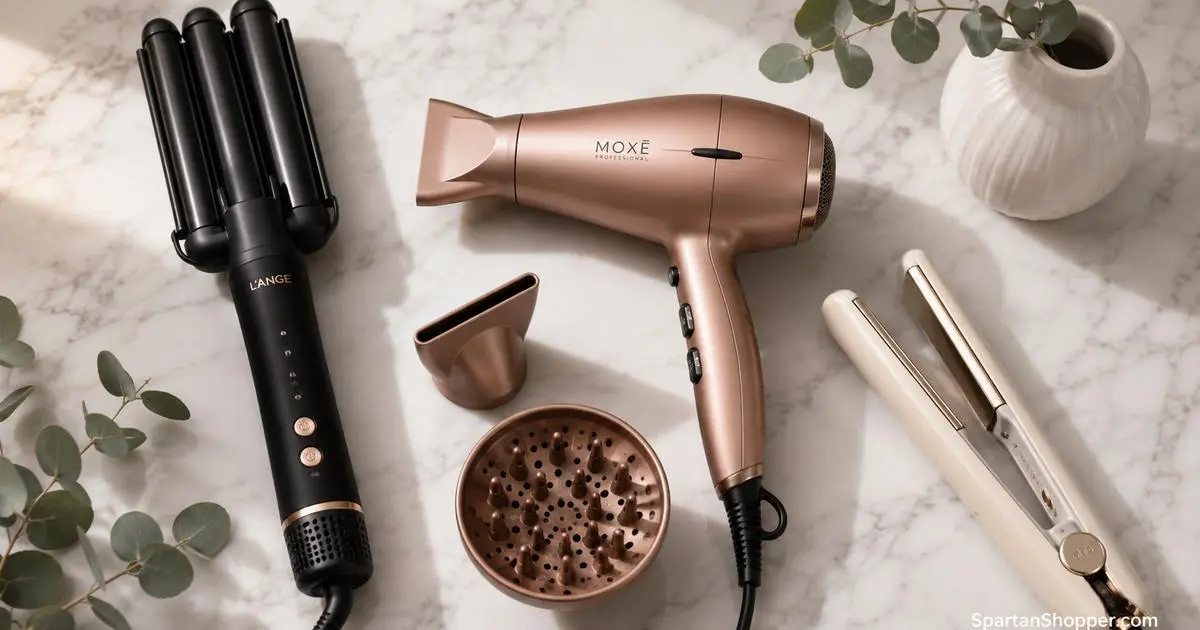
Beautifully styled hair can make you feel more confident, whether you are getting ready for the office, attending a wedding, preparing for a festive celebration, or simply enjoying a day out with friends. Today, you do not always need to visit a salon to achieve a neat and stylish look. The right hair styling tools can help you create different hairstyles at home while saving time and money.
However, choosing the right tool is not always easy. Hair dryers, straighteners, curling irons, hot-air brushes, and multi-styling devices all serve different purposes. The best option depends on your hair type, styling preferences, budget, and how frequently you use heat on your hair.
In this guide, we will explore the most popular hair styling tools, explain their uses, discuss important features to check before buying, and share practical tips for styling your hair safely at home.
1. Understanding Different Types of Hair Styling Tools
Before purchasing a styling tool, it is important to understand what each device does and which hairstyles it can help you achieve.
Hair Dryer: For Quick Drying and Everyday Styling
A hair dryer is one of the most useful tools for everyday hair care. It helps remove moisture from wet hair and can also be used to create volume, smoothness, and a salon-style blowout.
Modern hair dryers may include multiple heat and speed settings, cool-shot buttons, concentrator nozzles, and diffuser attachments.
Who should consider a hair dryer?
- People who wash their hair frequently.
- Anyone who wants to reduce the time spent air-drying.
- People who want to create volume at the roots or smooth their hair with a brush.
- Individuals with curly or wavy hair who want to use a diffuser attachment.
Buying tip: Choose a dryer with adjustable heat and airflow settings. A diffuser can be useful for naturally curly hair, while a concentrator nozzle helps direct airflow during brushing.
Hair Straightener: For Sleek and Smooth Hairstyles
A hair straightener uses heated plates to temporarily change the shape of your hair, helping create a straighter appearance. It can also be used to achieve soft bends and polished ends with the right technique.
Straighteners are available with ceramic, tourmaline-coated, and other plate materials. The actual performance depends on the design, temperature control, plate quality, and overall construction.
Important features to check:
- Adjustable temperature settings.
- Smooth plates that glide without pulling hair.
- A plate width suitable for your hair length and thickness.
- Automatic shut-off, where available.
- A design that is comfortable to hold and easy to control.
If you have fine, bleached, coloured, or damaged hair, avoid unnecessarily high temperatures. Thick or coarse hair may require a different setting, but higher heat is not automatically better.
Curling Iron or Curling Wand: For Bouncy Curls and Waves
Curling tools help create a variety of hairstyles, from tight curls to loose, beach-inspired waves.
A curling iron generally has a clamp that holds the hair in place, while a curling wand typically requires you to wrap the hair around the heated barrel manually.
Barrel size makes a significant difference:
- Smaller barrels: Often create tighter curls.
- Medium barrels: Suitable for defined curls and versatile styling.
- Larger barrels: Often create looser curls and soft waves.
For Indian weddings, parties, festive occasions, and family functions, curling tools can help create glamorous hairstyles that complement sarees, lehengas, gowns, and other traditional or western outfits.
Always use a heat protectant and follow the manufacturer’s instructions. Never wrap wet hair around a conventional curling iron unless the device is specifically designed for wet or damp hair.
Hot-Air Brush: For Volume and a Blowout Effect
A hot-air brush combines airflow with a brush-shaped styling attachment. Depending on its design, it can help dry partially damp hair, smooth strands, add root lift, and create curved ends.
It may be particularly useful for people who find it difficult to coordinate a separate hair dryer and round brush.
Before buying one, check whether it is intended for damp hair or dry hair, because not every hot-air brush is designed for the same purpose.
Multi-Styling Tools: Multiple Functions in One Device
Multi-styling tools may include interchangeable attachments for drying, smoothing, curling, or adding volume.
They can be convenient if you enjoy experimenting with different hairstyles but do not want to purchase several separate devices.
However, compare the available attachments carefully. Some products are designed primarily for drying and smoothing, while others offer more specialised styling functions. A larger number of attachments does not necessarily mean better performance.
2. How to Choose the Right Hair Styling Tool for Your Hair Type
Your natural hair texture and condition should influence your purchase decision.
Fine or Thin Hair
Fine hair can lose volume easily and may be more vulnerable to heat damage.
Look for tools with low, adjustable temperature settings, lightweight construction, and smooth surfaces. A hair dryer with a suitable nozzle or a gentle hot-air brush may be useful when your main goal is to create volume.
Avoid repeatedly passing a straightener over the same section of hair.
Thick or Coarse Hair
Thick hair can take longer to dry and may require more time to style.
Consider a dryer with adequate airflow, a straightener with appropriately sized plates, or a curling tool that suits your preferred curl size.
Temperature control is still important. Start at a moderate setting and increase it only if necessary and permitted by the manufacturer’s instructions.
Curly or Wavy Hair
If you want to preserve your natural curls, a diffuser attachment can help distribute airflow more gently than directing a concentrated stream at your hair.
If you prefer straight or smoother hairstyles, look for tools with adjustable heat and plates that glide smoothly. Use smaller sections only when necessary, rather than repeatedly exposing the same strands to heat.
Dry, Damaged, or Colour-Treated Hair
Hair that is already dry, brittle, bleached, or chemically treated requires extra care.
Prioritise lower heat settings, limited styling frequency, gentle detangling, and conditioning products suited to your hair. If your hair breaks easily, reducing heat styling may be more beneficial than purchasing a more advanced tool.
Remember that no styling device can completely eliminate heat damage.
3. Important Features to Check Before Buying Hair Styling Tools
Product descriptions often highlight wattage, plate materials, temperature ranges, and advanced technologies. Understanding these features can help you compare products more effectively.
Temperature control: This allows you to select a setting appropriate for your hair and styling task. Fixed-temperature tools offer less flexibility.
Heat-up time: A faster heat-up time can be convenient when you are getting ready in the morning, but it should not be the only factor influencing your decision.
Plate or barrel material: Ceramic surfaces are commonly used for their smooth finish and heat distribution. Other coatings and materials have different properties, so evaluate the complete product design rather than relying on the material name alone.
Weight and grip: A lightweight tool with a comfortable handle may be easier to use, especially if you have long or thick hair.
Cord length and swivel design: A sufficiently long cord and a swivel connection can make styling easier. Check the plug type and electrical compatibility for use in India.
Safety features: Automatic shut-off, heat-resistant tips, and suitable insulation can improve convenience and reduce certain risks. These features vary by model.
Warranty and service: Check the manufacturer’s warranty, seller information, service availability, and return policy before ordering.
Authentic reviews: Read recent reviews that discuss performance over time, durability, temperature consistency, and ease of use. Look beyond star ratings and promotional descriptions.
4. Hair Styling Tools Worth Exploring Before You Buy
If you are planning to upgrade your hair styling routine, compare the features and price of different tools before making a decision.
You can explore a hair styling product through this Amazon link:
Explore Hair Styling Tools on Amazon
Before placing an order, verify the product’s exact name, available attachments, temperature settings, seller details, customer reviews, warranty, and current price. Product availability and prices may change.
Choose a device based on the hairstyle you actually want to create. If you mainly need quick drying, a good hair dryer may be more useful than a complex multi-styler. If you regularly create curls for parties or special occasions, a suitable curling tool may be a better investment.
5. How to Use Hair Styling Tools Without Unnecessary Damage
Heat styling can make your hair look polished, but frequent or excessive heat can contribute to dryness, breakage, and rough texture. A careful routine can help reduce avoidable damage.
Start With the Right Hair Preparation
Detangle your hair gently before styling. Use a suitable conditioner after washing and apply a heat-protectant product according to its instructions.
A heat protectant can help reduce heat-related damage, but it does not make hair completely immune to high temperatures.
Dry Your Hair Appropriately
If you are using a conventional straightener or curling iron, ensure your hair is completely dry unless the device is explicitly designed for wet or damp use.
Gently remove excess water with a towel rather than rubbing your hair aggressively. When blow-drying, start with moderate heat and keep the airflow moving instead of concentrating it on one area for too long.
Select a Suitable Temperature
Do not automatically choose the highest available setting. Start low and adjust only as needed.
Fine, fragile, bleached, or damaged hair generally benefits from more conservative heat exposure. If your hair is already showing signs of damage, reduce the frequency of heat styling.
Work in Manageable Sections
Dividing your hair into manageable sections can help you achieve a more consistent result without repeatedly styling the same strands.
Use controlled movements and avoid holding a hot tool against one section for longer than necessary.
Allow Your Hair to Cool
After creating curls or waves, let them cool before brushing or arranging them. This can help preserve the shape of your hairstyle.
Finish with a suitable styling product if needed, following its directions and avoiding excessive product buildup.
6. Easy Hairstyles You Can Create at Home
The right tool can help you create several looks without changing your entire routine.
Everyday straight hair: Use a straightener on completely dry hair, working in manageable sections. Keep the temperature as low as practical for your hair.
Soft, bouncy blowout: Use a dryer and round brush, or a suitable hot-air brush, to add volume and shape the ends. Avoid excessive tension or heat.
Loose waves: A curling iron with an appropriate barrel can create relaxed waves. Alternate the direction of curls if you want a more natural-looking finish.
Defined curls: Choose a barrel size suited to the curl pattern you want. Allow each section to cool before separating the curls gently.
Voluminous roots: A dryer with a concentrator nozzle or an appropriate styling brush can help lift the roots. Avoid directing very hot air at the scalp.
For weddings and festive events, you can combine soft waves with decorative hair accessories, embellished clips, or floral pieces to complement Indian ethnic outfits.
7. Common Hair Styling Mistakes to Avoid
Even a high-quality tool may deliver disappointing results if it is used incorrectly.
- Using a straightener on wet hair when the device is not designed for wet use.
- Selecting the maximum temperature for every styling session.
- Repeatedly passing a heated tool over the same section.
- Skipping heat protection when using heated styling tools.
- Pulling tangled hair forcefully through a brush or styling attachment.
- Using damaged electrical cords or continuing to use a device that overheats or behaves abnormally.
- Ignoring cleaning and maintenance instructions.
- Buying a tool based only on appearance or advertised features without checking whether it suits your needs.
Regularly inspect your tools and clean them according to the manufacturer’s instructions. Unplug electrical devices after use, allow them to cool completely before storing, and keep them away from water.
8. How Much Should You Spend on a Hair Styling Tool?
The right budget depends on your requirements rather than the number of features advertised.
For occasional styling, a simple device with reliable temperature control and appropriate safety features may be sufficient. If you style your hair frequently, investing in better ergonomics, useful attachments, durability, and accessible after-sales service may offer greater long-term value.
Before purchasing, compare the total cost of ownership, including accessories, replacement parts where applicable, and warranty coverage.
Avoid assuming that an expensive tool will automatically protect your hair better. Your technique, heat exposure, and hair condition remain important factors.
9. Frequently Asked Questions About Hair Styling Tools
Which hair styling tool is best for beginners?
A basic hair dryer with adjustable heat and speed settings is a useful starting point for many people. If you want smoother styles, a straightener may be appropriate; for curls, consider a curling tool with a comfortable grip and straightforward temperature controls.
Is daily use of a hair straightener safe?
Frequent straightening increases cumulative heat exposure and may contribute to dryness and breakage. Reducing the frequency of use, selecting a suitable temperature, and protecting your hair can help minimise risk.
Are multi-styling tools worth buying?
They can be worthwhile if you regularly create different hairstyles and will use several attachments. If you only need one function, a dedicated tool may be simpler and more economical.
Can I use a curling iron on damp hair?
Use a conventional curling iron only on completely dry hair. Damp-hair styling is appropriate only when the particular device is expressly designed for that purpose and its instructions permit it.
What should I check before buying a hair styling tool online in India?
Check the product specifications, seller reputation, verified customer feedback, warranty, return conditions, electrical compatibility, and the final price. Confirm that the product includes the attachments you need.
Final Thoughts
Hair styling tools can make your daily routine easier and help you create a variety of looks at home. The key is to select a device that matches your hair type, preferred hairstyles, budget, and styling frequency.
Start by identifying your main need: quick drying, smooth straight hair, defined curls, extra volume, or multiple styling options. Compare products carefully, prioritise temperature control and safe operation, and avoid unnecessary heat exposure.
If you are ready to explore available options, check out hair styling tools on Amazon and review the specifications before choosing the right product for your routine.
At Saavra.in, our goal is to help you discover useful products and make more informed shopping decisions. With the right tool and a thoughtful hair-care routine, you can enjoy versatile hairstyles while giving your hair the care it deserves.